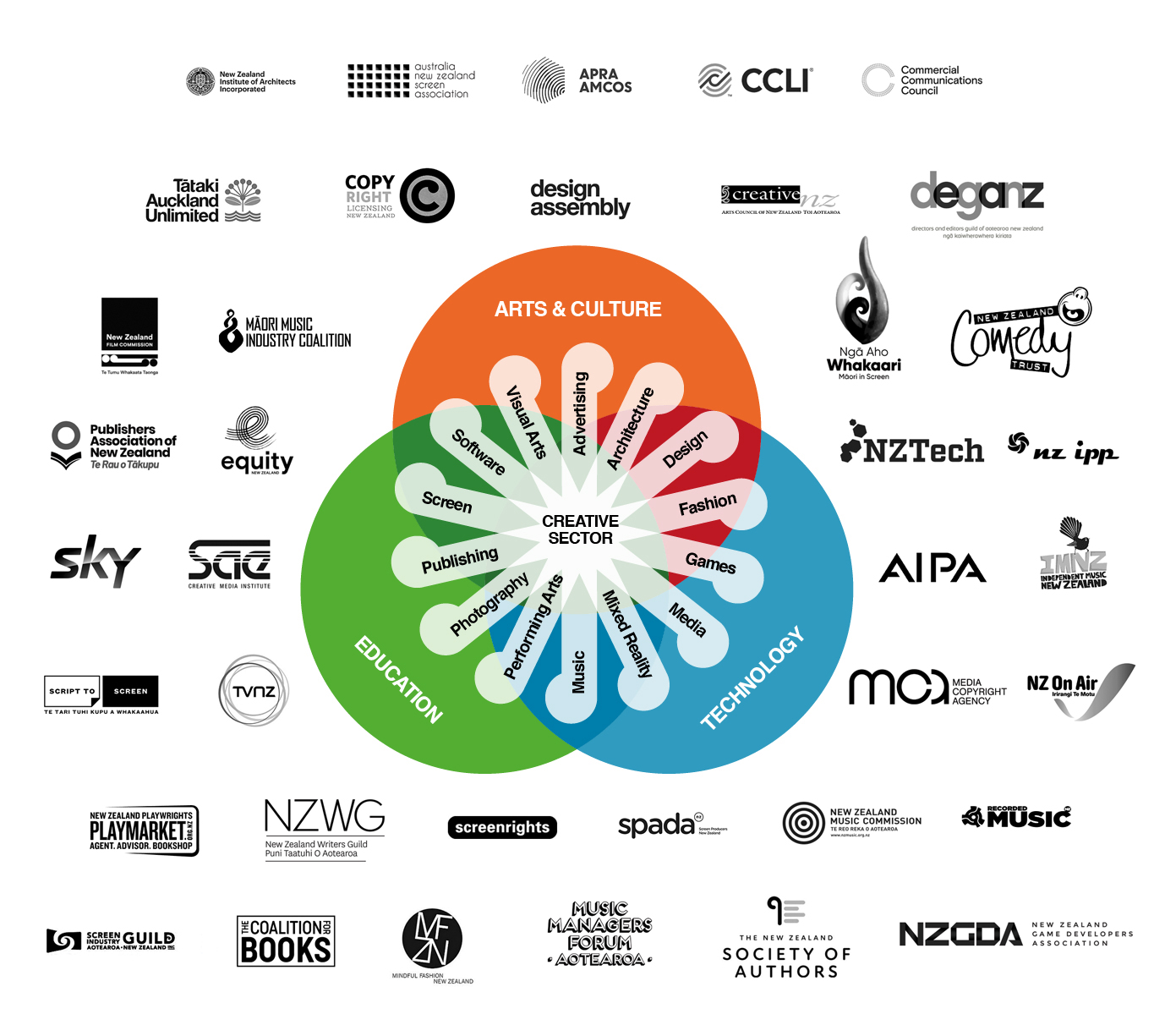
Our purpose is to unite the diverse voices of our creative ecosystem; to champion and advocate for the value and impact of the creative industries – in order to create jobs and economic growth; and to help all New Zealanders thrive.
Watch our 2023 video here
Latest Resources
UK Trade in a Global Creative Economy
The report shows the UK’s creative service exports continued to rise over the 2010 – 2021 period despite the headwinds from Brexit and the Covid-19 pandemic. The report confirms the UK’s creative industries are an export success story but warns against complacency, as...
Submission to Auckland Council Long Term Plan 2024
A Minister for the Creative and Cultural Economy is WeCreate’s “ask” of the next government.
UNCTAD K-Content Goes Global
Since the 2000s, the Republic of Korea has championed the development of the content-based industry as a
cornerstone for economic growth.
Letter to Minister Simmonds re WDC’s
The future of Workforce Development Councils is under review. WeCreate wrote to Hon Penny Simmonds about implications of this for the creative ecosystem. Read the letter >
Internet NZ Annual Internet Survey 2023
The 2023 Internet NZ annual survey on the public’s use, opinions and concerns of the Internet has been published.
OECD Key Issues in Digital Trade October 2023
A report from the OECD Global Forum on Trade held in 2023 - Making Digital Trade Work for All View the full report >
A Minister for the Creative and Cultural Economy
A Minister for the Creative and Cultural Economy is WeCreate’s “ask” of the next government.
MFAT Digital Trade Review 2023
In 2023, MFAT, with Martin Jenkins, undertook a review of Aotearoa New Zealand’s engagement in digital trade.
Latest News
Submission to Auckland Council Long Term Plan 2024
A Minister for the Creative and Cultural Economy is WeCreate’s “ask” of the next government.
AI in the Creative Industries Conference
"Enhance creativity; keep the fun part; AI is a tool for creativity, not a replacement" Kimball Thurston, Wētā FX Sitting in the movie theatre at Park Road Productions listening to two people who live and breathe AI in...
Letter to Minister Simmonds re WDC’s
The future of Workforce Development Councils is under review. WeCreate wrote to Hon Penny Simmonds about implications of this for the creative ecosystem. Read the letter >
A Minister for the Creative and Cultural Economy
A Minister for the Creative and Cultural Economy is WeCreate’s “ask” of the next government.
Creative Jobs Growing at Twice the UK Economy Average
Creative industries continued to power the growth of the UK’s workforce…
Creative Sector can be a big contributor to a more productive and prosperous New Zealand
WeCreate, the alliance of New Zealand’s creative…
Why are we not resourcing all teachers to be creatives?
Why is the Government putting ‘creatives’ in schools rather…
WeCreate welcomes government’s Copyright Issues Paper
WeCreate, the alliance of New Zealand’s creative industries, has…
Our Eco-System